
This post contains affiliate links. If you buy through them, we may earn a small commission at no extra cost to you. Learn more.
Before you buy anything: measure the width, depth and height of the spot you want to organize, and write it down. Most organizer returns happen because something didn't fit.
Quick picks
Short on time? Here's every idea and the organizer that makes it work.
- Pull-out drawers under the sinkL-shaped 2-tier pull-out organizerView →
- Use the inside of cabinet doorsOver-the-cabinet-door organizerView →
- Double your shelves with risersExpandable cabinet shelf riserView →
- Hang baskets under shelvesUnder-shelf wire basketsView →
- Turntables for deep corners10-inch non-skid turntables, set of 4View →
- Spices on the side of the fridgeMagnetic spice shelves, 4-packView →
- A dish rack over the sinkExpandable over-the-sink dish rackView →
- Store pans and lids uprightPot and lid organizer rackView →
- Drawer dividers that fit your drawerExpandable bamboo drawer organizerView →
- A slim cart in the gap by the fridgeSlim rolling storage cartView →
- Clear bins inside the fridgeStackable clear fridge bins, 6-packView →
- A can rack for the pantry shelf3-tier stackable can rackView →
- Hang utensils on the wallAdhesive utensil hangerView →
Pull-out drawers under the sink
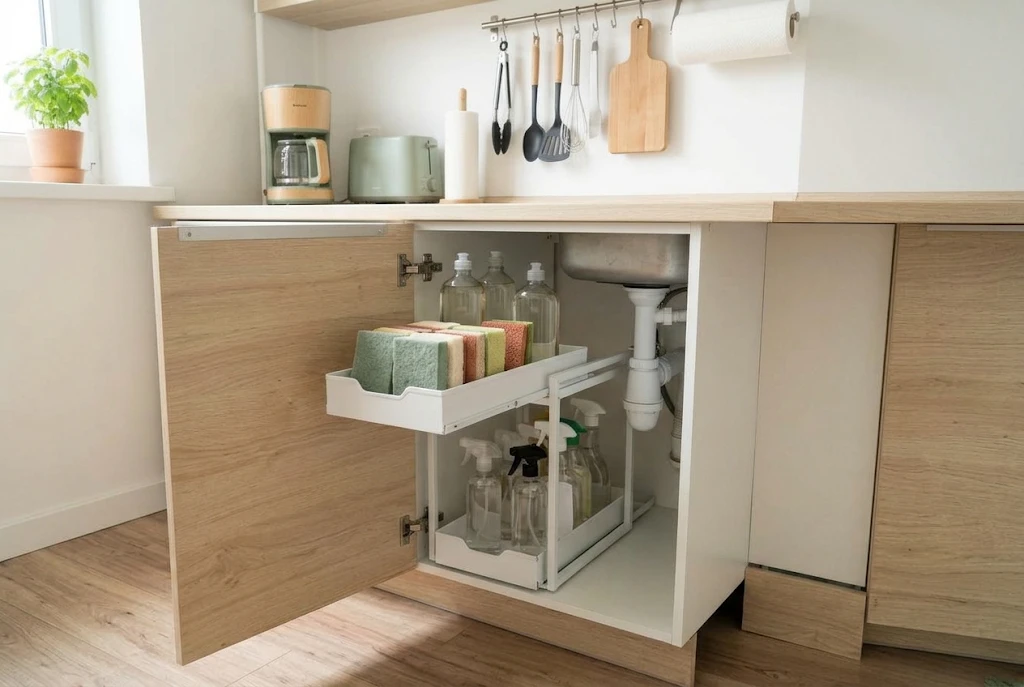
The cabinet under the sink is deep, dark and interrupted by pipes, so things get shoved to the back and forgotten. A two-tier pull-out organizer turns it into two drawers you can slide out, and an L-shaped one wraps around the drain pipe instead of fighting it.
Keep daily items (dish soap, sponges) on the top tier and refills on the bottom.
Use the inside of cabinet doors
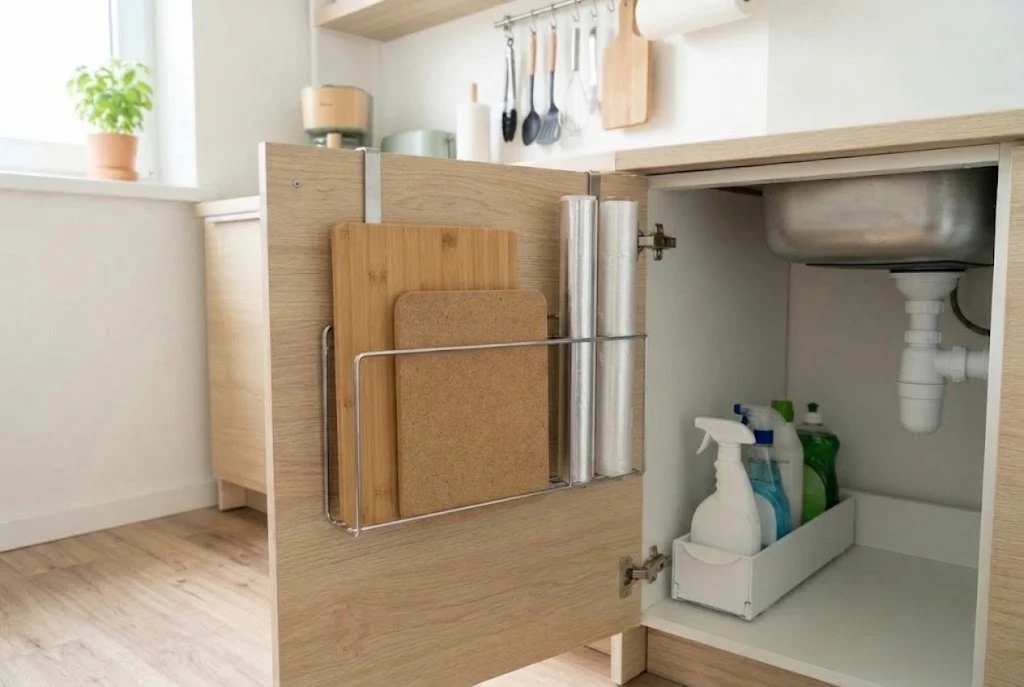
Cabinet doors are flat, unused surfaces that open right where you need things. They're perfect for thin, flat items: cutting boards, foil and plastic wrap, pot lids or baking sheets.
Over-the-door holders hook on with no tools, which makes them great for renters. Check that the door still closes with the holder on and items inside.
Double your shelves with risers
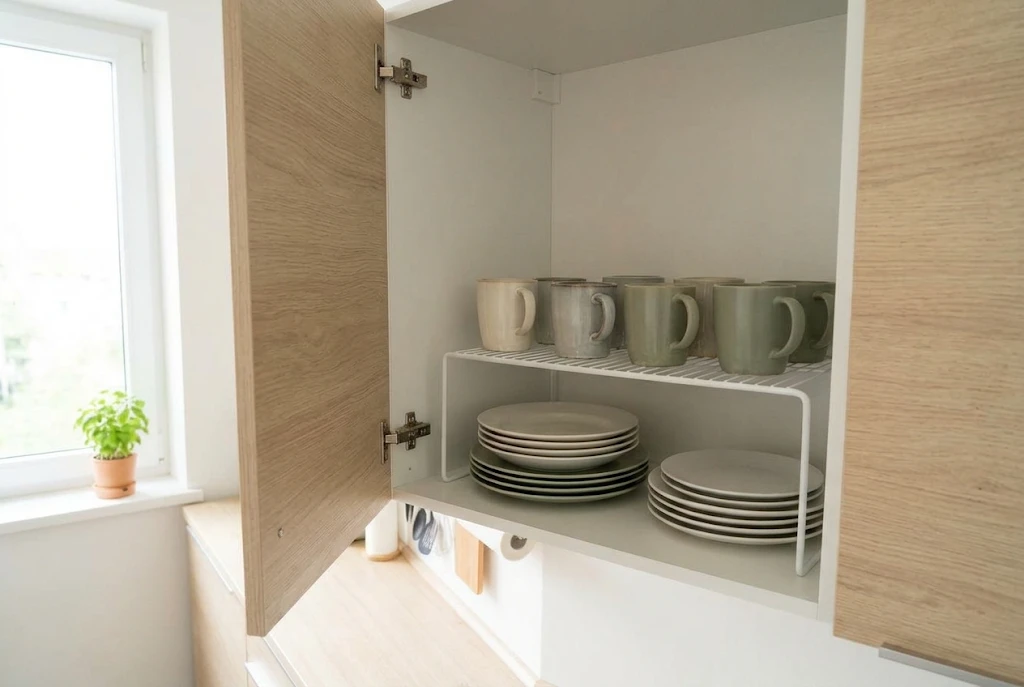
Most cabinet shelves have a lot of empty air above a short stack of plates or mugs. A shelf riser adds a second level in that empty space, so you can put mugs on top and plates underneath.
An expandable riser adjusts to the width of your cabinet, so you don't have to guess the size.
Hang baskets under shelves
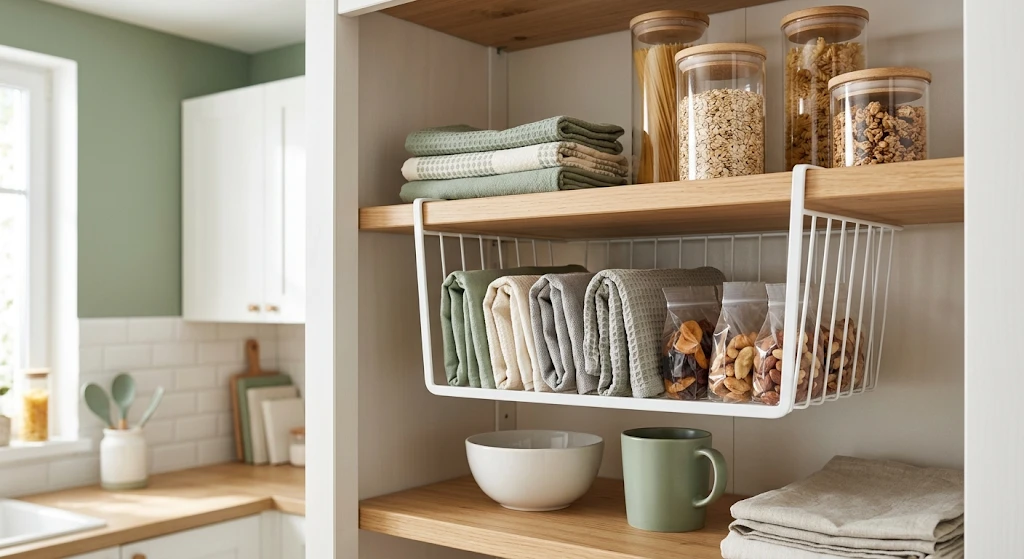
Under-shelf baskets slide onto an existing shelf and hang below it, using the gap between shelves. They work for small, light things: snack bags, tea, dish towels or food wraps.
Measure your shelf thickness first, since the basket's clips only fit shelves up to a certain thickness.
Turntables for deep corners
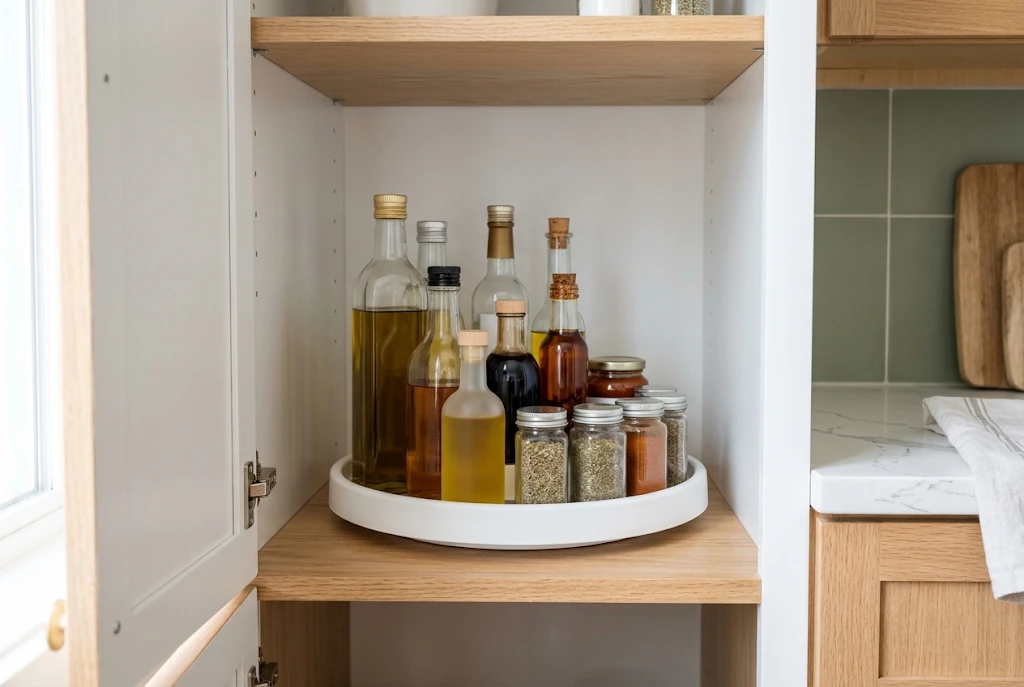
Deep corners are where jars go to be forgotten. A turntable (also called a lazy Susan) brings the back of the cabinet to the front with one spin. Use them for oils, sauces, vinegar and spices.
A 10-inch turntable fits most standard upper cabinets. Measure the depth before ordering a bigger one.
Spices on the side of the fridge
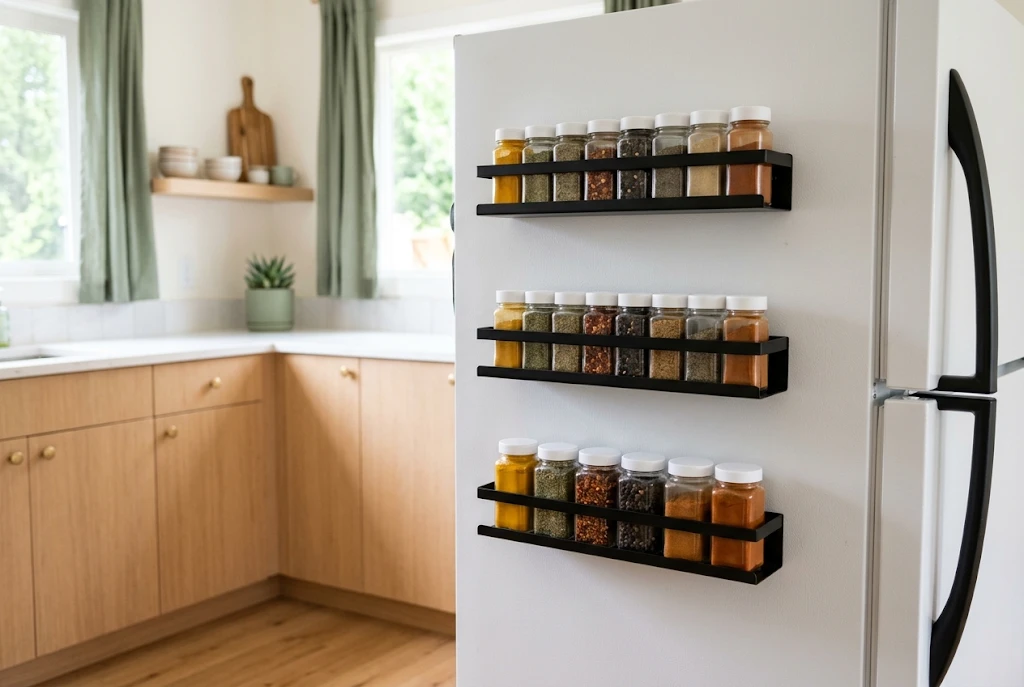
If the side of your fridge faces into the kitchen, it's a free wall. Magnetic shelves stick to it without drilling and free up a whole cabinet shelf that spices used to take.
Keep heavy bottles off them and stick to spices, small jars and paper towels.
A dish rack over the sink
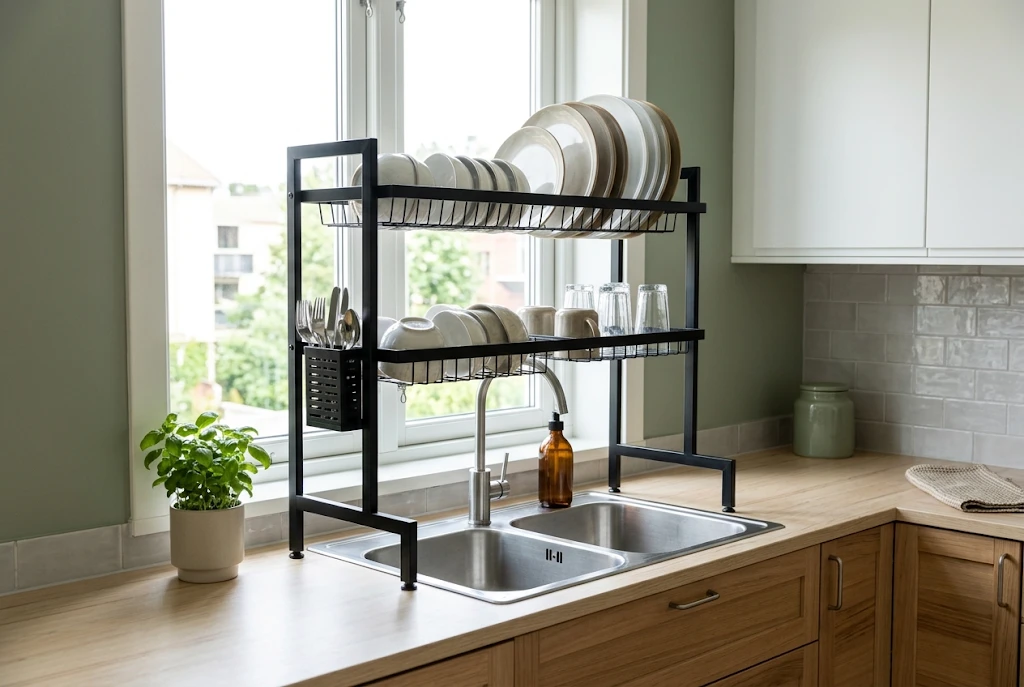
A dish rack on the counter eats space you need for cooking. An over-the-sink rack stands above the sink instead, so dishes drip straight into it and the counter stays clear.
Measure your sink width and the height under any cabinets above it. An expandable rack makes this easier.
Store pans and lids upright
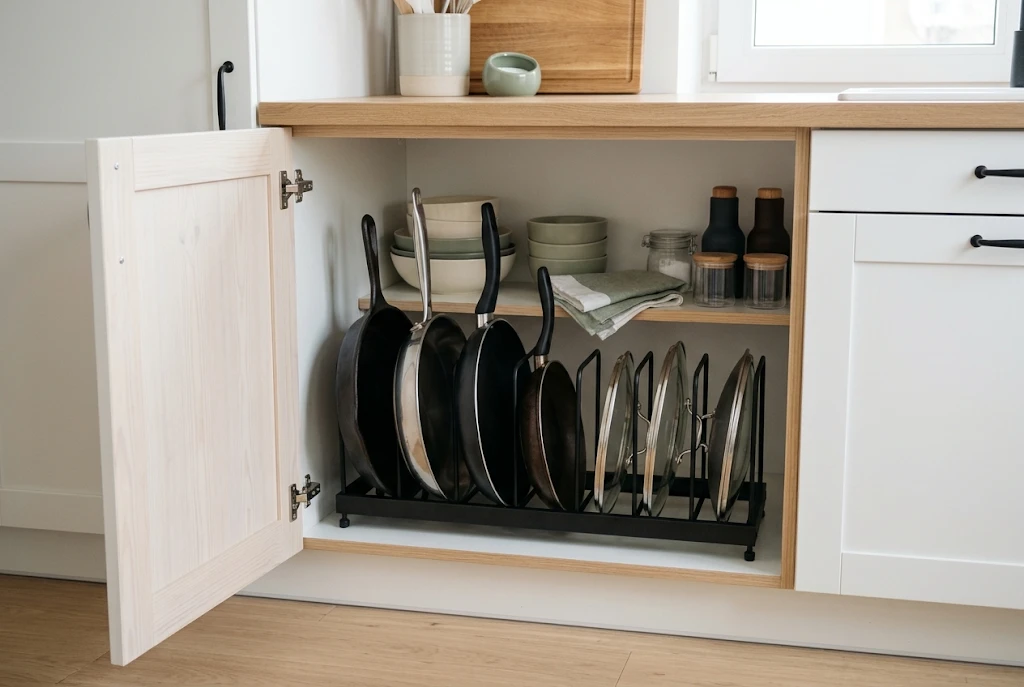
Stacked pans mean lifting three to get the one at the bottom. A simple rack lets you file pans and lids upright like books, so you can grab any of them without unstacking the rest.
Drawer dividers that fit your drawer
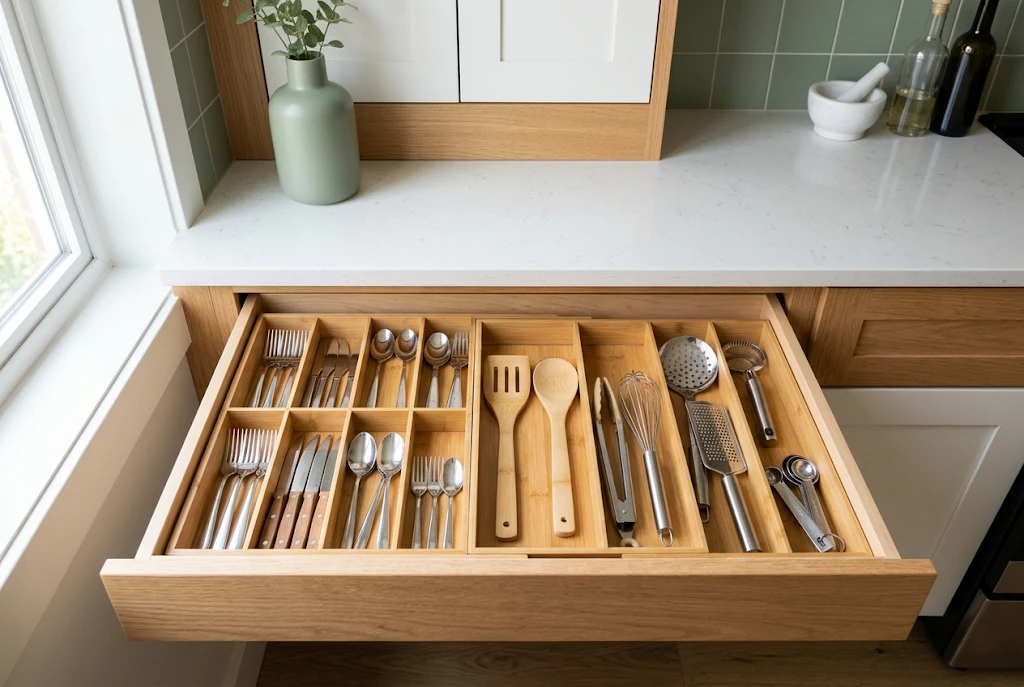
A utensil tray that's too small leaves dead space on both sides, and everything slides around. An expandable organizer stretches to the full width of the drawer, so every inch gets used.
Group by use: everyday cutlery up front, cooking tools in the long slots, rarely used items at the back.
A slim cart in the gap by the fridge
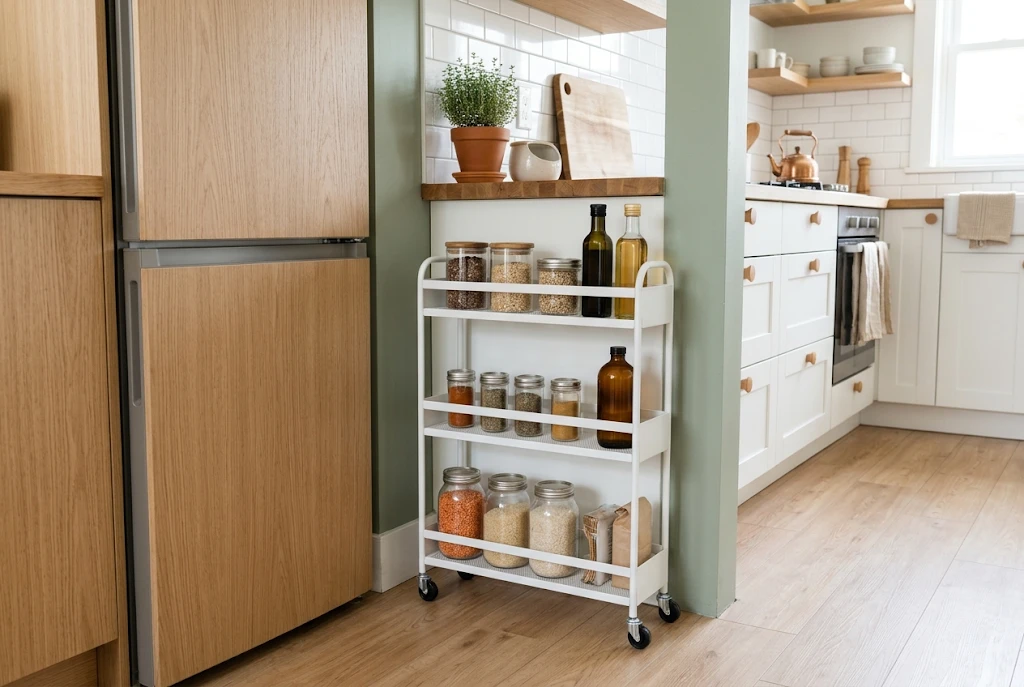
That narrow gap between the fridge and the wall, or between the counter and the fridge, is often wide enough for a slim rolling cart. It slides out when you need it and disappears when you don't.
Measure the gap carefully, including depth, and leave a little room so the cart rolls freely.
Clear bins inside the fridge

Clear bins group food by type (snacks, dairy, leftovers), so you pull out a whole bin instead of digging. You also see what's there, which means less food forgotten at the back.
A can rack for the pantry shelf
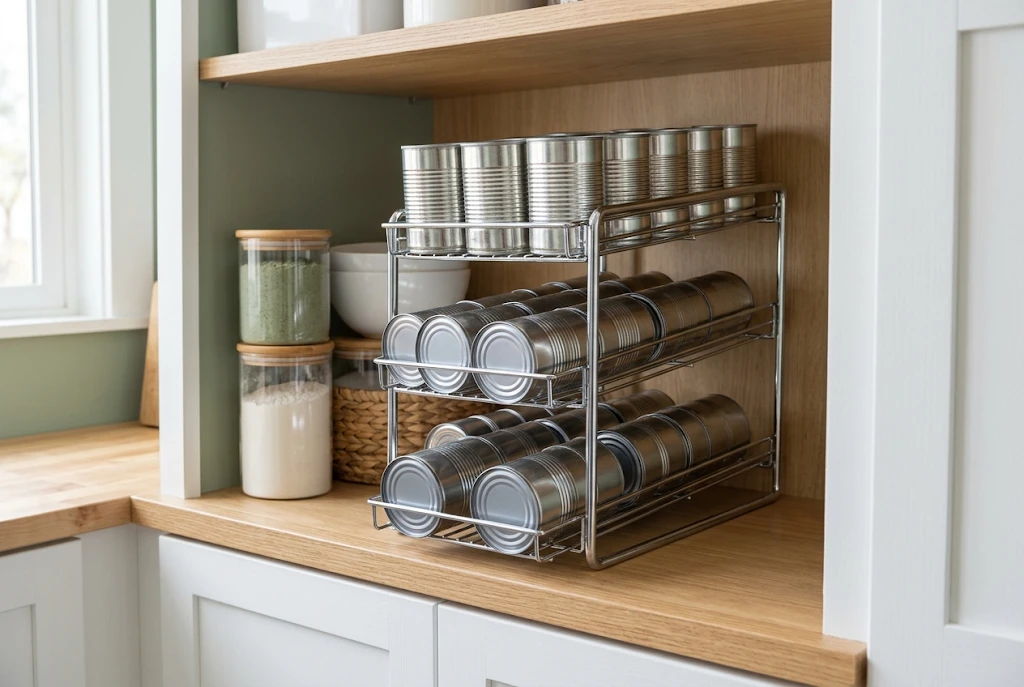
Cans stacked on a shelf hide each other. A tiered can rack shows every can and rolls the next one forward when you take one, so the oldest cans get used first.
Hang utensils on the wall
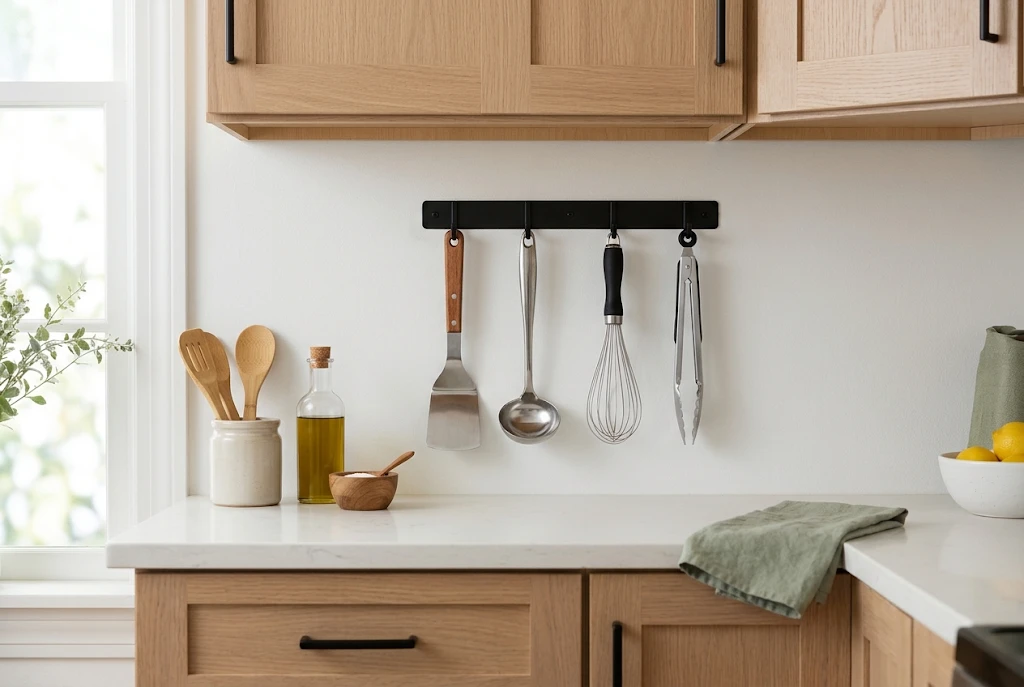
The wall between the counter and the upper cabinets is prime storage in a small kitchen. Hang the tools you use every day (spatulas, ladles, whisks) and you free up a whole drawer.
Adhesive hangers work for renters. Clean the wall well before sticking them on.
Keep it organized: 3 simple rules
- Declutter before you buy. Organizers can't fix having too much stuff. Donate duplicates first.
- Store things where you use them. Pans near the stove, cups near the sink or coffee maker.
- Do a 5-minute reset once a week. Put things back in their zones before small messes grow.
Save this for later
Hover over any image to save it to Pinterest, or follow us for new small-space ideas every week.